
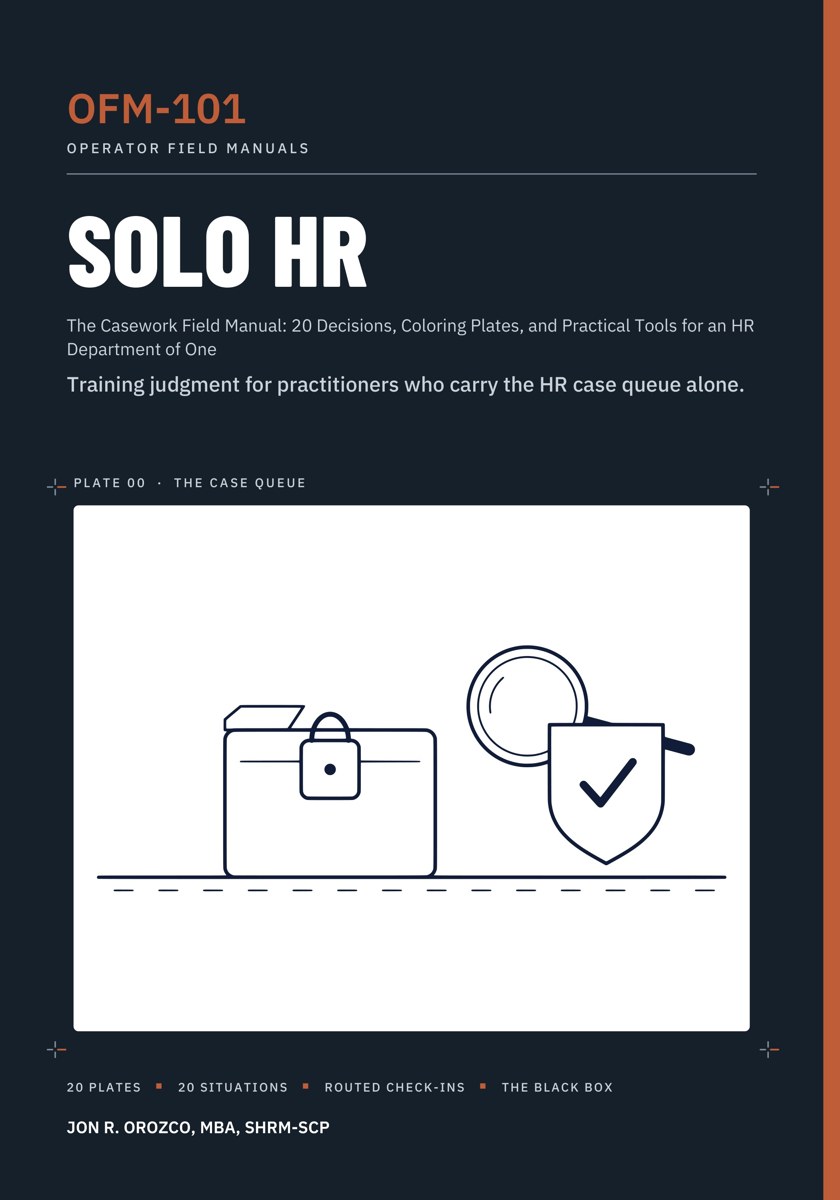
HR department of one
Solo HR
The Casework Field Manual: 20 Decisions, Coloring Plates, and Practical Tools for an HR Department of One
Triage competing cases, make the queue visible, and give each next action an owner and a date.
Coming to Amazon
The paperback is being prepared for release. A purchase link will appear here when the Amazon listing is available.
Try a sample situationWho this is for
Solo HR practitioners and small-business people operations leads.
A solo HR practitioner carries competing cases without a visible queue or reliable backup.
The current manuscript includes 20 practice situations, reflective coloring plates, worked debriefs, and 16 practical tools.
The practice inside
01Triage Before the Queue
Sort urgency, open a usable intake record, make capacity visible, and assign the next action before requests pile up.
02Everyday Employee Relations
Most of the job is talking and listening. This part covers open doors, rumors, conflicts, attendance, and the paper trail.
03Policies, Pay and Paperwork
The unglamorous work that keeps people paid and protected. This part covers handbooks, time off, payroll, benefits, and fair pay.
04Hard Cases
The cases that keep you up at night. This part covers complaints, investigations, endings, difficult managers, and your own limits.
A situation from the manuscript
Three requests before nine
Payroll reports missing hours, an employee reports a threatening message, and the owner wants the handbook refreshed today. You are alone. The request that sounds loudest is not necessarily the most urgent.
Check what your first triage pass should establish.
- Immediate danger and the emergency response route.
- Time-sensitive pay or reporting obligations.
- Who is qualified to handle each issue.
- The next action, owner, and due time.
- What routine work can move after leadership agrees.
Make your call, then read the field note
Address immediate danger through the emergency route. Then involve the appropriate pay and case support. Negotiate the routine request instead of silently carrying all three.
A threatening message calls for an immediate safety check and the emergency route if danger is present.
Missing worked hours need prompt payroll coordination and specialist review of applicable timing.
Ask leadership to move the handbook deadline or assign support. Record the agreed priority rather than promising all three.
Try this next: Write your emergency, payroll, and counsel contacts in an approved reference sheet.
Practice with fictional details. This excerpt offers general education, not legal, financial, or clinical advice. Use approved workplace processes and qualified support for real cases.
Tools you can return to
- Your next 30 casework days
- Case intake sheet
- Open cases
- Handle it, escalate it, or call counsel?
- Policy review tracker
- Conversation notes
- Coach a manager
- Manager coaching log
- HR-of-one bingo
- Offboarding checklist
- Twelve weeks of habits
- Weekly HR review
- Monthly file audit
- Owner capacity briefing
- When I am away
- Next year plan
Put the practice to work
Use one situation for individual reflection or a manager discussion. Compare your first response with the field note, then choose one change to try in the following week.
Read: Solo HR: triage the casework before the queue takes over →Discuss a team learning session →A book supports practice. For an active workplace issue, follow your organization’s process and seek appropriate professional guidance.
Keep exploring
Write It Down
Write a factual record someone else can understand, with the employee’s account and a clear next step.
Promoted Over Your Peers
Practice the shift from coworker to supervisor without turning friendship into favoritism.
The Decision Field Manual
Name the owner, size the stakes, and record the reasons so the same decision stops coming back.