
 Vol. 01Charter · 25% off
HR Policy Starter Kit
When policies live in scattered files, establish a shared starting point. Nine policy templates, rollout guidance, gap assessment, and counsel-engagement tools help you plan the work.
For founders, HR leaders, and managers tired of revisiting the same issues. Use practical manuals to clarify policies, responsibilities, decisions, and routines. Start with the problem in front of you, then build from there.
Founding readers get 25% off every volume and the complete library. The first hundred to take the full library become Founding Members.
ManagerOS™
Put the manuals into a weekly management routine with ManagerOS. Five days, five jobs, about 75 minutes a week.
Take the entire library at once, add the editable source files and a working session, or pair it with the FYL Core Compliance course.
All 100 manuals for building consistent ways of working across the organization. Choose the complete collection when your needs span several operating disciplines.
The complete library, editable source files, and a working session to help you adapt the material to your organization.
The complete library paired with the FYL Core Compliance course. Bring operating references and structured compliance learning together.
Choose a focused set for management, hiring, operations, Ai adoption, or policy and risk. Each track brings related manuals together so you can work on one area at a time.
When management varies from person to person, start with coaching scripts, accountability, and performance. Establish shared expectations and follow-up.
When hiring and onboarding depend on individual habits, connect workforce design, hiring infrastructure, and a repeatable start for new hires.
When priorities and decisions keep returning for clarification, establish owners, review routines, and a shared operating rhythm.
When Ai adoption outruns the process, connect readiness, governance, and workflow redesign. Define the work and human oversight before expanding use.
When policies and records are scattered, organize the foundations. Connect policy, investigation processes, and compliance preparation with qualified review where needed.
Browse 100 manuals across 5 tracks. Use the summaries to find the issue you need to address. Buy an individual manual, a focused track, or the complete library.
Organize policies, records, escalation routes, and review responsibilities. Start where unclear processes make people issues harder to handle.
Vol. 01Charter · 25% offWhen policies live in scattered files, establish a shared starting point. Nine policy templates, rollout guidance, gap assessment, and counsel-engagement tools help you plan the work.
 Vol. 04Charter · 25% off
When a workplace concern needs investigation, organize the process and record. Nine templates cover intake through post-closure monitoring, with appropriate qualified support.
 Vol. 06Charter · 25% off
When a handoff depends on what one person remembers, document the work before passing it on. Make operating knowledge easier for the next owner to find and use.
 Vol. 18Charter · 25% off
When an audit or claim exposes scattered records, review your preparation before the next request. Organize the policies, documentation, and review work that need attention.
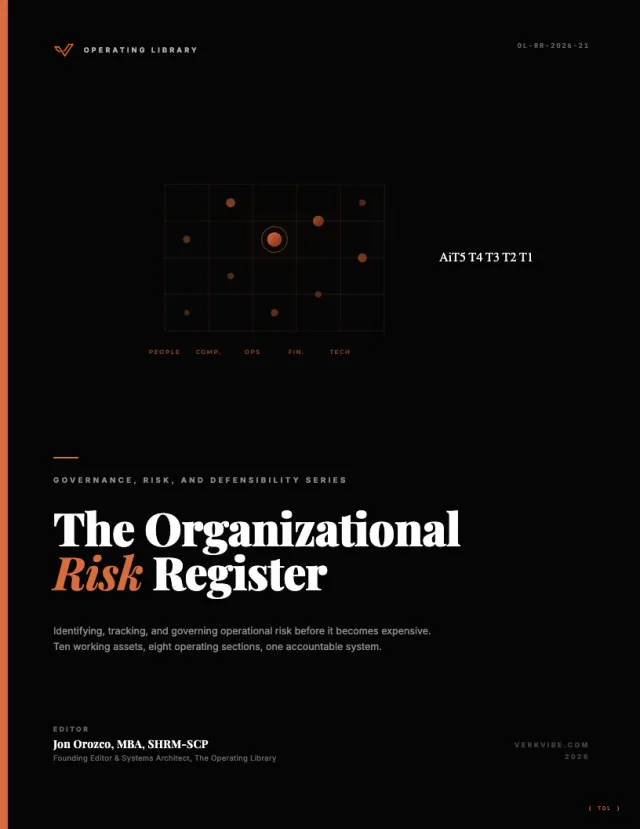 Vol. 21Charter · 25% off
When risks are discussed but nobody owns them, make them visible in a shared register. Name an owner and establish how each risk will be reviewed.
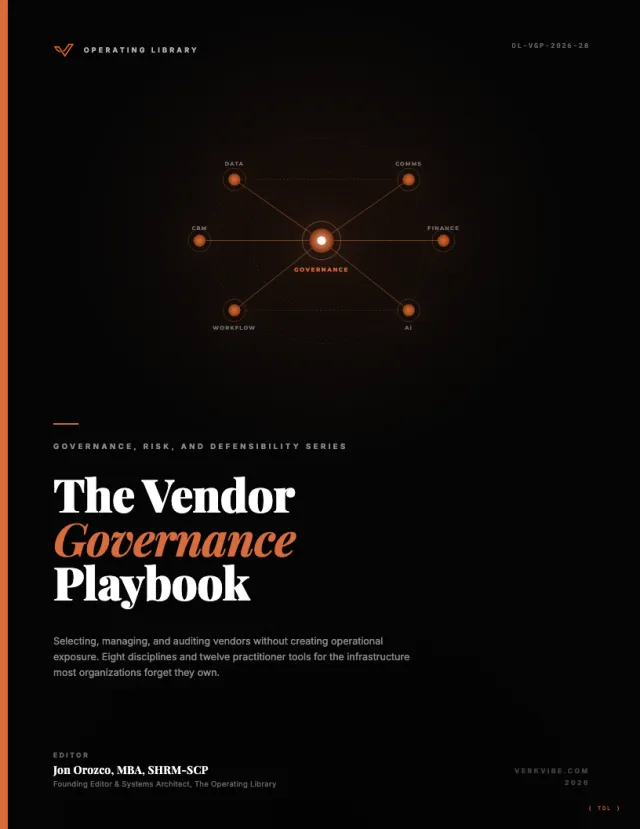 Vol. 28Charter · 25% off
When vendors touch important work or data, define oversight across their lifecycle. Examine procurement, ongoing review, and offboarding, including Ai vendors.
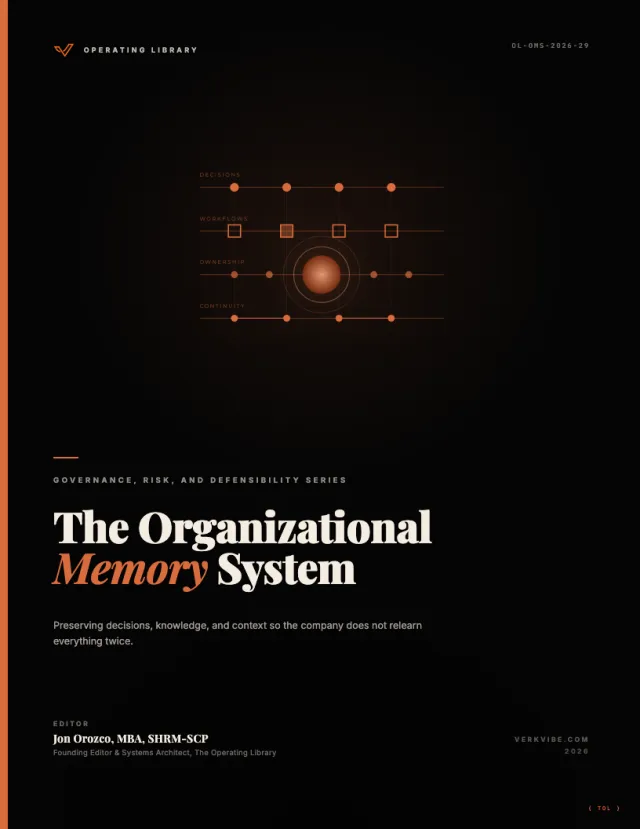 Vol. 29Charter · 25% off
When a decision disappears into old messages, preserve its reasons and context. Establish a way to retrieve what the organization has learned.
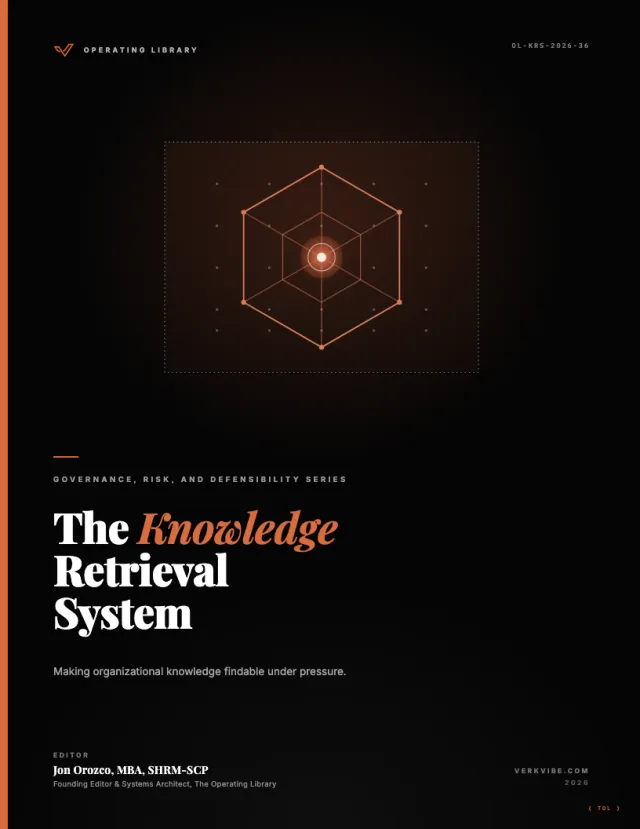 Vol. 36Charter · 25% off
When important knowledge is scattered, organize how people and Ai retrieve it. Build a process for finding information and checking whether it can be trusted.
 Vol. 37Charter · 25% off
When an incident interrupts the work, use a defined response. Establish how the team contains the issue, records what happened, and coordinates the next steps.
 Vol. 51Charter · 25% off
When decision authority is unclear, define who can make which calls. Establish governance that makes responsibilities and accountability visible as the organization grows.
 Vol. 57Charter · 25% off
When disruption tests the organization, examine its preparation and response capacity. Build practices for absorbing shocks and continuing the work that matters.
 Vol. 59Charter · 25% off
When a risk threatens the strategy, make the threat and response explicit. Establish how leadership identifies, ranks, and prepares for strategic risks.
 Vol. 74Charter · 25% off
When an Ai policy leaves everyday decisions unanswered, define operational controls. Address approvals, access, data use, human review, and audit trails.
 Vol. 81Charter · 25% off
When leadership changes, preserve the context the next team needs. Establish how decisions, lessons, relationships, and operating standards are retained.
 Vol. 83Charter · 25% off
When a crisis creates competing demands, establish how leaders decide and communicate. Define escalation, information discipline, and a cadence for reviewing the situation.
 Vol. 84Charter · 25% off
When staffing, technology, or vendor disruption interrupts work, examine how operations continue. Plan continuity around the dependencies the organization relies on.
 Vol. 85Charter · 25% off
When events put organizational trust at risk, define how to respond. Examine reputation risks, prevention, recovery, and the responsibilities involved.
 Vol. 92Charter · 25% off
When board and executive responsibilities overlap, clarify their roles and review cadence. Connect oversight, strategic risk, and the decisions each group owns.
Set clearer expectations, prepare difficult conversations, and follow through on commitments. Give managers a consistent way to handle everyday work.
 Vol. 02Charter · 25% off
When a manager does not know how to open a difficult conversation, give them language to prepare. Use coaching scripts to clarify expectations, listen, and agree on follow-up.
 Vol. 07Charter · 25% off
When commitments keep slipping, make the expectation, owner, and follow-up explicit. Establish a consistent way to assign work and review progress.
 Vol. 12Charter · 25% off
When performance conversations depend on an annual review, establish a regular way to examine execution. Make expectations, evidence, and follow-up part of everyday management.
 Vol. 13Charter · 25% off
When employee concerns surface, establish a consistent route for conversations, mediation, and escalation. Recognize which issues need a formal process or qualified support.
 Vol. 24Charter · 25% off
When managers are expected to deliver without enough support, examine the systems around their work. Build enablement that supports consistent management across the organization.
 Vol. 47Charter · 25% off
When stated values differ from everyday behavior, examine the systems that reinforce that behavior. Connect culture to how work is assigned, reviewed, and recognized.
 Vol. 53Charter · 25% off
When commitments depend on individual habits, establish a shared process. Define how work is agreed, tracked, reviewed, and followed through across teams.
 Vol. 72Charter · 25% off
When Ai supports management, clarify what managers still own. Examine its role in planning, documentation, coaching, communication, and decision support.
Clarify roles, structure hiring decisions, and make onboarding repeatable. Connect workforce plans to the capacity your organization needs.
 Vol. 11Charter · 25% off
When growth strains roles and reporting lines, examine how the workforce is organized. Build a structure that connects responsibilities, capacity, and the work ahead.
 Vol. 14Charter · 25% off
When hiring decisions vary from manager to manager, structure the work from sourcing through scorecards. Give the team shared criteria and a process to review.
 Vol. 15Charter · 25% off
When onboarding relies on memory, document what happens from day one through day ninety. Make responsibilities and the new hire’s next steps clear.
 Vol. 25Charter · 25% off
When headcount requests outrun the plan, examine capacity and future scenarios together. Connect workforce decisions to the work the business expects to deliver.
 Vol. 32Charter · 25% off
When pay decisions are difficult to explain, establish their criteria and review process. Build a compensation structure whose reasoning can be understood and examined.
 Vol. 33Charter · 25% off
When people cannot see how to progress, clarify roles, levels, and career paths. Give managers a consistent basis for discussing growth and advancement.
 Vol. 46Charter · 25% off
When workforce data sits apart from workforce decisions, connect the two. Use evidence to examine planning, performance, retention, and organizational design.
 Vol. 56Charter · 25% off
When critical responsibilities depend on one person, prepare for a transition. Build the leadership bench and plan how authority will transfer.
Assess readiness, define human oversight, and plan workflow changes. Give Ai adoption an operating process people can review.
 Vol. 03Charter · 25% off
When Ai use grows faster than your rules, plan the first ninety days of implementation. Establish priorities, oversight, and a sequence your team can review.
 Vol. 09Charter · 25% off
When teams adopt Ai without shared boundaries, define who approves its use and who reviews the work. Address legal, security, and operational considerations before deployment.
 Vol. 19Charter · 25% off
When a workflow is unclear, map and redesign the work before automating it. Decide what should change, where Ai fits, and what people must oversee.
 Vol. 26Charter · 25% off
When teams use different definitions for the same number, clarify data ownership and review. Establish the discipline needed to interpret dashboards consistently.
 Vol. 35Charter · 25% off
When Ai agents take on real work, establish supervision and accountability. Define how agents are deployed, reviewed, and kept within their assigned responsibilities.
 Vol. 43Charter · 25% off
When data and signals arrive without a clear interpretation, organize how they inform decisions. Establish a way for leaders to examine what the organization is learning.
 Vol. 71Charter · 25% off
When people and Ai share work, define how responsibilities fit together. Examine workforce design with human judgment and Ai contributions in the same operating model.
 Vol. 73Charter · 25% off
When knowledge is scattered across files and people, organize it for use. Establish how information becomes governed, retrievable, and ready to support the work.
 Vol. 75Charter · 25% off
When digital workers join existing workflows, define their place in the organization. Connect agents, assistants, and automations to the operating model.
 Vol. 78Charter · 25% off
When a workflow can execute through automation or Ai, examine how it should operate. Design the work and its oversight before increasing autonomy.
Give decisions an owner, align priorities, and establish a rhythm for reviewing the work. Connect leadership direction to everyday execution.
 Vol. 05Charter · 25% off
When meetings repeat without moving the work, define the cadence, capture decisions, and assign follow-up. Build a routine people can return to each week.
 Vol. 08Charter · 25% off
When complexity makes routine work confusing, clarify what matters and how the work should move. Use operational clarity to examine the organization before adding more process.
 Vol. 10Charter · 25% off
When change disrupts established ways of working, examine the resistance and the process beneath it. Plan how people will understand, adopt, and review the new approach.
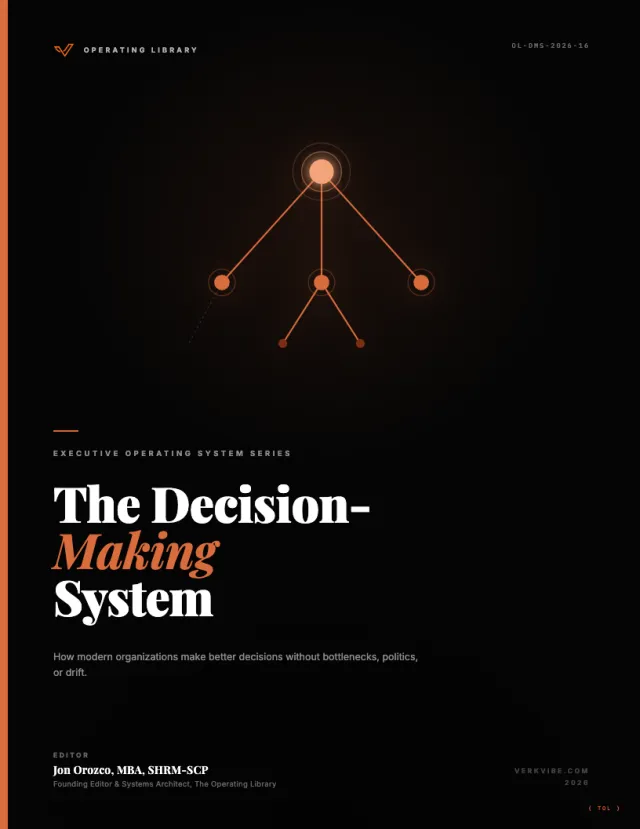 Vol. 16Charter · 25% off
When decisions stall or return for another discussion, clarify authority and the route to a call. Establish a process for input, decisions, and follow-through.
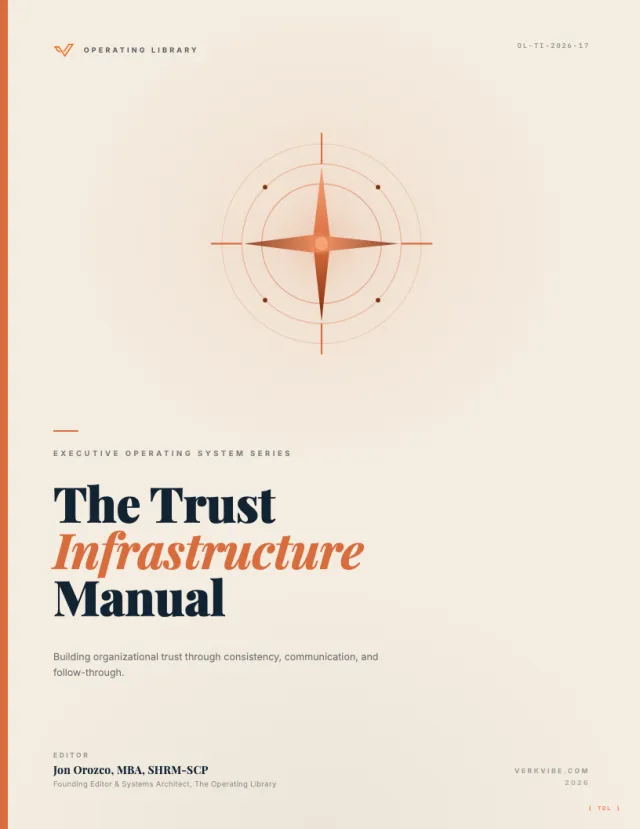 Vol. 17Charter · 25% off
When promises and actions diverge, examine how the organization communicates and follows through. Build trust through consistent practices people can observe.
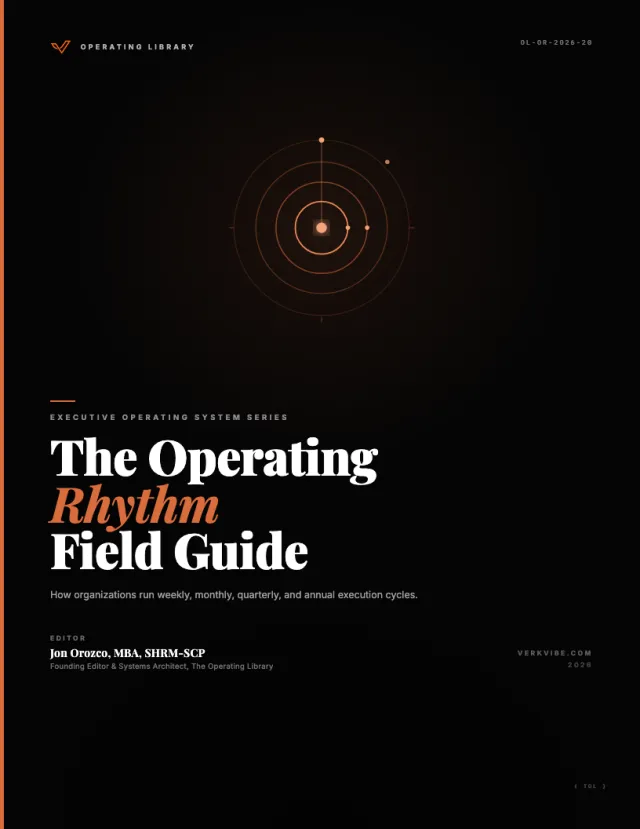 Vol. 20Charter · 25% off
When execution happens only after a reminder, establish regular reviews. Connect weekly, monthly, quarterly, and annual work into a rhythm your team can follow.
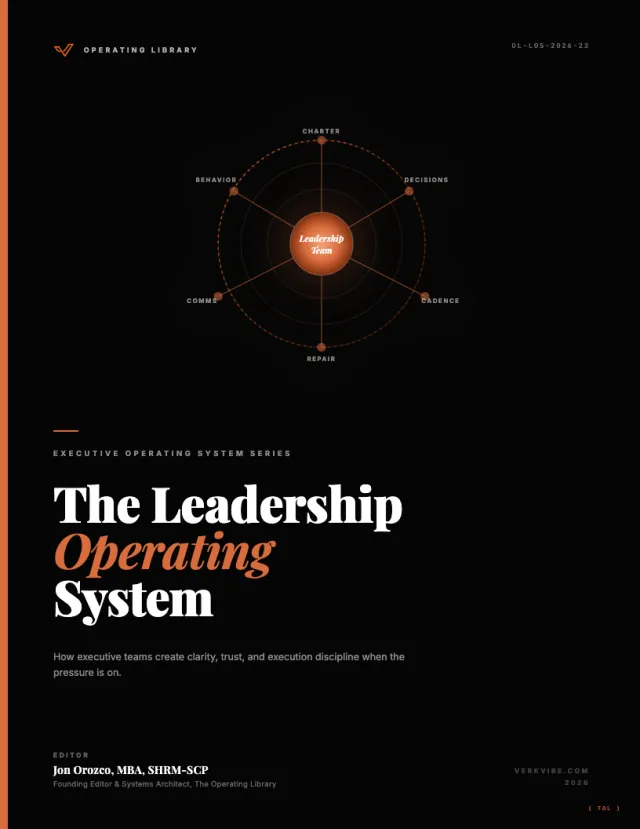 Vol. 22Charter · 25% off
When leadership runs on reaction, examine your decision habits and review routines. Give the executive role a consistent way to set direction and follow through.
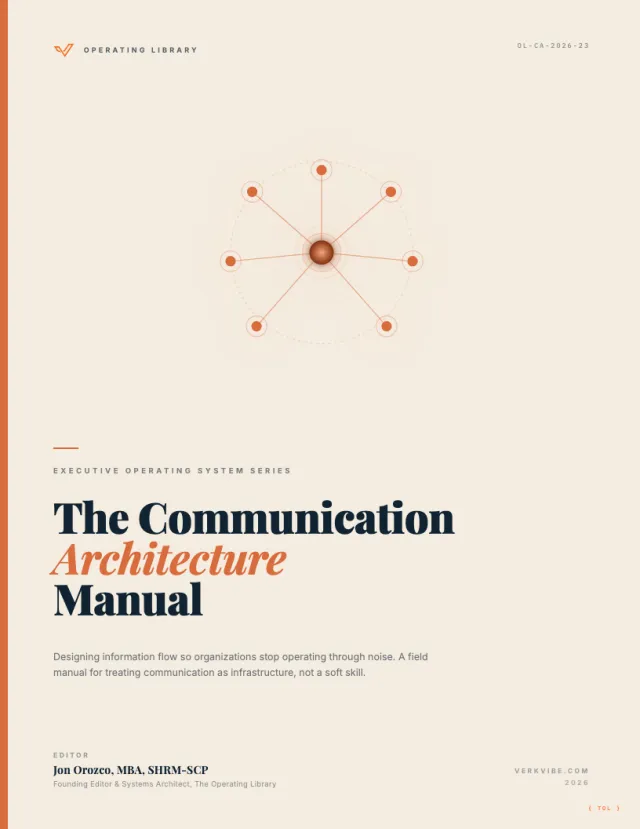 Vol. 23Charter · 25% off
When information reaches people late or without context, define how it should move. Establish communication routines with clear purposes and responsibilities.
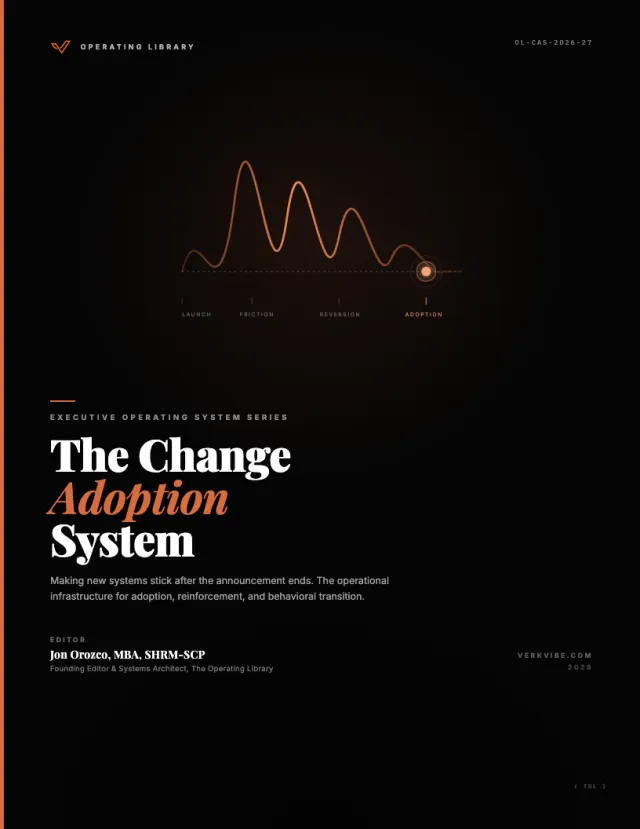 Vol. 27Charter · 25% off
When people return to the old process after a launch, plan the reinforcement the change needs. Review adoption, support, and the behaviors that must shift.
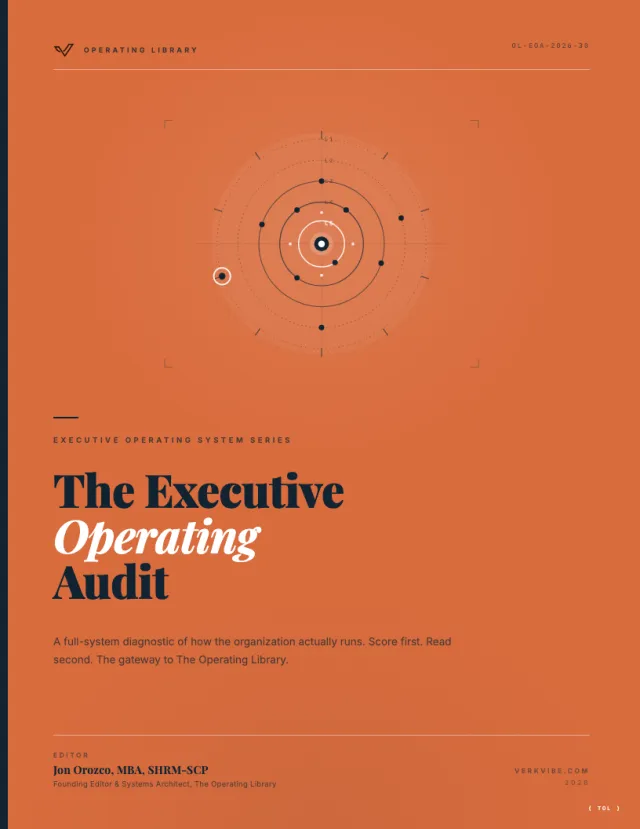 Vol. 30Charter · 25% off
When several operating problems compete for attention, begin with a structured executive review. Identify where to focus and which library resources fit the work.
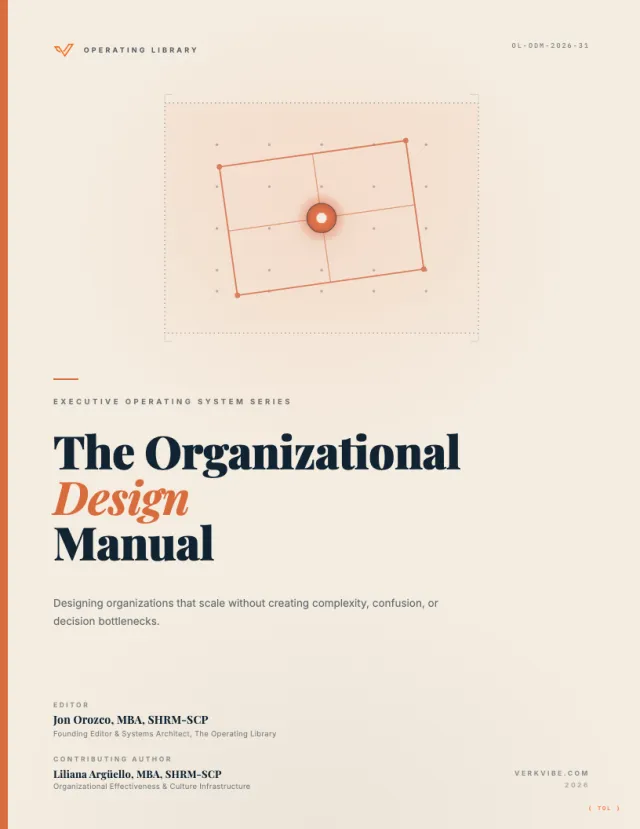 Vol. 31Charter · 25% off
When authority and reporting lines are unclear, examine how decisions move through the organization. Define responsibilities and the structure that supports growth.
 Vol. 34Charter · 25% off
When headcount outgrows existing processes, decide what to build first. Sequence the organizational systems that need to support the next stage of growth.
 Vol. 38Charter · 25% off
When leadership dashboards show too much and explain too little, choose the measures that matter. Clarify how they are defined, maintained, and reviewed.
 Vol. 39Charter · 25% off
When plans lose relevance as conditions change, establish a review cadence. Connect direction, priorities, resource choices, and adjustments to the work underway.
 Vol. 40Charter · 25% off
When conditions shift, examine how the organization notices and responds. Build routines for interpreting signals, making decisions, and reallocating effort.
 Vol. 41Charter · 25% off
When measures do not help people decide what to do, reconsider what you track. Define operating metrics, their ownership, and the reviews they support.
 Vol. 42Charter · 25% off
When growth adds work without improving margin, examine the economics underneath operations. Connect costs, capacity, and the financial logic of the operating model.
 Vol. 44Charter · 25% off
When work crosses departments and loses its owner, define shared responsibilities. Establish how teams coordinate handoffs, decisions, and execution across boundaries.
 Vol. 45Charter · 25% off
When an executive decision involves uncertainty and competing pressures, examine the tradeoffs explicitly. Give the call a structured basis for judgment and review.
 Vol. 48Charter · 25% off
When teams pursue conflicting priorities, clarify the direction they share. Connect organizational goals to the commitments each team is making.
 Vol. 49Charter · 25% off
When a plan does not translate into progress, examine ownership, review cadence, and visibility. Establish a consistent way to follow execution and address gaps.
 Vol. 50Charter · 25% off
When operating improvements remain isolated, examine how they work together. Connect discipline across the organization to the way it delivers value over time.
 Vol. 52Charter · 25% off
When delegated work keeps returning for permission, clarify the decisions being handed over. Define the outcome and authority the next owner needs.
 Vol. 54Charter · 25% off
When influence shapes decisions outside formal roles, understand the relationships and incentives involved. Navigate organizational politics while keeping your principles explicit.
 Vol. 55Charter · 25% off
When confidence in the organization weakens, examine how trust is earned and maintained. Establish practices for keeping commitments and rebuilding credibility.
 Vol. 58Charter · 25% off
When growth makes information harder to share, define the communication system. Establish how updates, decisions, and context move across a larger organization.
 Vol. 60Charter · 25% off
When operating systems need to work together, review the organization as a whole. Bring the library’s foundational disciplines into a shared model for long-term work.
 Vol. 61Charter · 25% off
When strategy and delivery are disconnected, examine the operating model between them. Clarify how the organization turns direction into work and value.
 Vol. 62Charter · 25% off
When service delivery varies, examine the system customers depend on. Define how delivery is designed, governed, reviewed, and improved.
 Vol. 63Charter · 25% off
When projects deliver isolated improvements, identify the capabilities the organization needs to keep. Connect roles and processes to durable ways of working.
 Vol. 64Charter · 25% off
When competing demands exceed available resources, make allocation decisions explicit. Examine where resources go and the reasoning behind those choices.
 Vol. 65Charter · 25% off
When the organization accepts more work than it can sustain, examine its capacity. Clarify how much work it can absorb and deliver before adding commitments.
 Vol. 66Charter · 25% off
When initiatives compete without a shared view, manage them as a portfolio. Examine their priorities and connections instead of reviewing each project in isolation.
 Vol. 67Charter · 25% off
When work gets stuck between intake and completion, examine the route it follows. Clarify how it is prioritized, assigned, sequenced, reviewed, and improved.
 Vol. 68Charter · 25% off
When a process works differently for every team, document and review it. Establish how business processes are designed, governed, and improved.
 Vol. 69Charter · 25% off
When functions operate as separate systems, examine how they fit together. Build an enterprise operating model that connects their work.
 Vol. 70Charter · 25% off
When organizational design remains a set of separate plans, bring the pieces together. Use the operating-design volumes to develop a practical model for integrated work.
 Vol. 76Charter · 25% off
When data and Ai insights inform a decision, examine how judgment is applied. Combine evidence, pattern recognition, and structured reviews of the call.
 Vol. 77Charter · 25% off
When lessons remain in a retrospective, give them a route into everyday work. Capture learning, improve the system, and share the change across teams.
 Vol. 79Charter · 25% off
When intelligence sits in separate teams and tools, examine how it connects. Bring people, data, Ai, workflows, and governance into a shared operating view.
 Vol. 80Charter · 25% off
When Ai becomes part of the organization’s core work, bring the related disciplines together. Develop an executive blueprint that connects workforce design, workflows, and governance.
 Vol. 82Charter · 25% off
When continuity depends on an individual executive, plan the handover. Connect succession, knowledge transfer, and decision continuity to a leadership bench.
 Vol. 86Charter · 25% off
When stakeholder interests compete, make the governance process clear. Establish how the organization considers responsibilities to the people and groups it affects.
 Vol. 87Charter · 25% off
When conditions require a strategic adjustment, clarify what changes and why. Connect adaptation to the work so teams can understand the new direction.
 Vol. 88Charter · 25% off
When growth or transition changes the organization, decide what must be preserved. Examine the commitments and practices that need continuity through the change.
 Vol. 89Charter · 25% off
When planning extends beyond the next growth stage, examine long-term organizational design. Consider how the institution can work across leadership and market changes.
 Vol. 90Charter · 25% off
When continuity disciplines remain separate, bring them into one institutional view. Connect memory, leadership transition, crisis response, and governance for the work ahead.
 Vol. 91Charter · 25% off
When data is incomplete, make your reasoning and tradeoffs explicit. Examine complexity, risk, and uncertainty as part of executive judgment.
 Vol. 93Charter · 25% off
When transformation touches the whole organization, examine the work beyond the announcement. Connect changes across its systems and responsibilities.
 Vol. 94Charter · 25% off
When certainty is unavailable, establish a way to keep reviewing the situation. Make decisions with incomplete information and adjust as conditions change.
 Vol. 95Charter · 25% off
When formal authority and real influence differ, examine how decisions move. Understand power, relationships, and the responsibilities attached to authority.
 Vol. 96Charter · 25% off
When business and technology plans pull apart, examine the architecture they share. Connect capabilities, information, governance, processes, and organizational design.
 Vol. 97Charter · 25% off
When advantage depends on more than a single offering, examine the systems behind it. Connect capabilities, trust, knowledge, reliability, and operating discipline.
 Vol. 98Charter · 25% off
When useful signals arrive from many directions, organize how they connect. Build an intelligence network across people, operations, markets, data, and Ai systems.
 Vol. 99Charter · 25% off
When an executive needs a reference across several operating disciplines, start here. Use the library’s practical executive manual to connect the work in front of you.
 Vol. 100Charter · 25% off
When designing the enterprise as a whole, bring its operating disciplines together. This flagship volume connects the preceding manuals into a model for governing and sustaining the organization.
Selected tools from The Manager HR Emergency Kit, free to preview. The full Kit provides a shared framework for handling the first response and knowing when to escalate.
Framework card
Pause. Listen. Acknowledge. Note. Escalate. The five-step first response every manager can run from memory.
Preview freeSelf-check
A five-minute check: would your managers know what to do when something happens?
Preview freeQuick card
One of the Kit's eight printable quick cards: what to say, what to do, and when to escalate.
Preview freeMini reference
The improvised lines that make employee situations worse, and the calmer language that replaces them.
Preview freeNot sure where to start?
Describe the issue you keep revisiting or the process you need to establish. We will help you choose a manual or track that fits your starting point.