
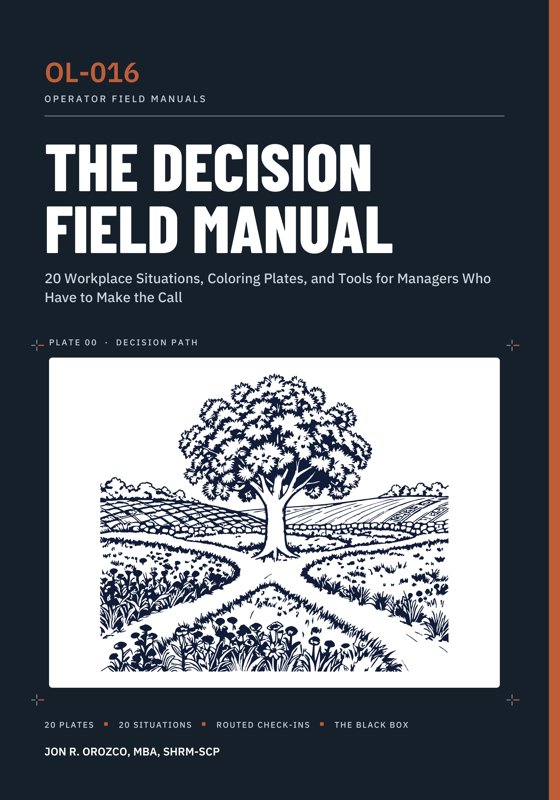
Decision-making
The Decision Field Manual
20 Workplace Situations, Coloring Plates, and Tools for Managers Who Have to Make the Call
Name the owner, size the stakes, and record the reasons so the same decision stops coming back.
Coming to Amazon
The paperback is being prepared for release. A purchase link will appear here when the Amazon listing is available.
Try a sample situationWho this is for
Managers and leaders who make decisions with incomplete information.
Decisions stall, bounce, or get made twice because nobody owns them.
The current manuscript includes 20 practice situations, reflective coloring plates, worked debriefs, and 16 practical tools.
The practice inside
01Who Owns the Call
Most stalled decisions are not hard. Nobody owns them. This section names the owner, fills the five seats, and spots the habits that quietly steal the call.
02Size It and Route It
Not every decision deserves the same road. This section sorts small from big, undoable from permanent, and ordinary from urgent.
03Decide and Record
A decision made in a meeting is only half done. This section gets the call made, the reasons written down, and the follow-up owned.
04Judge the Call, Not the Dice
Good decisions sometimes fail. Bad ones sometimes work. This section separates the quality of a call from the luck of its result, and builds the trust that keeps people deciding.
A situation from the manuscript
Eight opinions, zero owner
Eight people sit in a room for the third meeting about the vendor change. Everyone has a view. At the end of the hour someone says, "Let's regroup next week," and nobody says who decides.
What do you do before you leave the room?
- Offer to collect everyone's thoughts in a long email.
- Ask, "Who makes the call if we cannot agree?" and get a name.
- Wait. Surely someone senior will decide soon.
Make your call, then read the field note
Many people can have a voice. One person owns the outcome. Get the name before the meeting ends, because a decision without an owner is just a conversation.
The email feels helpful, but it collects views and leaves the call unowned. You will be back in the same room next week.
One question gets you a name, and a name turns a conversation into a decision.
Waiting hands the call to whoever speaks next. Senior does not mean assigned, so you may wait a long time.
Try this next: In your next meeting, ask out loud who owns the decision.
Practice with fictional details. This excerpt offers general education, not legal, financial, or clinical advice. Use approved workplace processes and qualified support for real cases.
Tools you can return to
- Install it in order
- Decision rights map
- The decision meeting checklist
- My decision log
- How big is this decision?
- Escalation note
- Review one decision
- Decision bingo
- Twelve weeks of decision habits
- What goes upward
- Approval map
- Decision quality review
- Ready to hand it off?
- Decisions that keep coming back
- A week of better calls
- Ai-assisted decisions
Put the practice to work
Use one situation for individual reflection or a manager discussion. Compare your first response with the field note, then choose one change to try in the following week.
Read: Before another meeting, name the person who owns the decision →Discuss a team learning session →A book supports practice. For an active workplace issue, follow your organization’s process and seek appropriate professional guidance.
Keep exploring
Write It Down
Write a factual record someone else can understand, with the employee’s account and a clear next step.
Solo HR
Triage competing cases, make the queue visible, and give each next action an owner and a date.
Promoted Over Your Peers
Practice the shift from coworker to supervisor without turning friendship into favoritism.