
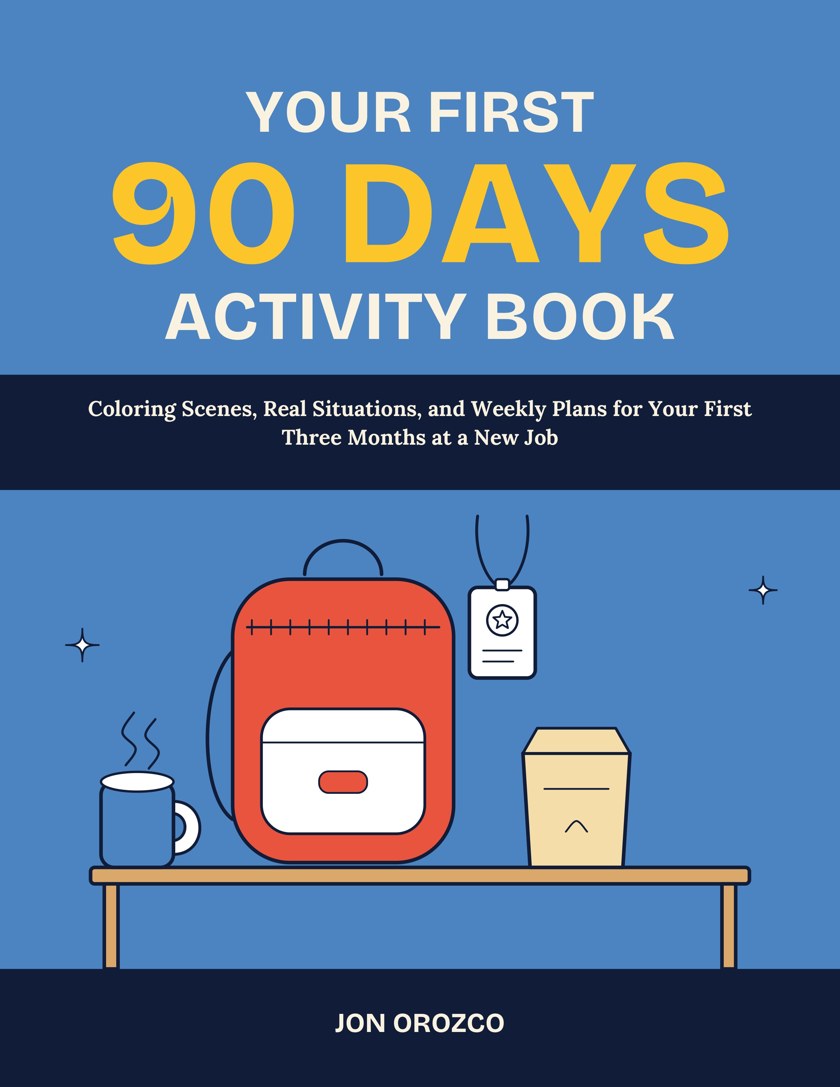
Starting a new job
Your First 90 Days Activity Book
Coloring Scenes, Real Situations, and Weekly Plans for Your First Three Months at a New Job
By Jon Orozco
A friendly, practical way to prepare for hard first-job moments and keep track of what they learn.
In development
This title is being developed. The sample below introduces the current manuscript; release details may change.
Try a sample situationWho this is for
New hires, recent graduates starting a first job, and people who gift them a good start.
New hires are expected to learn fast and look calm, and nobody teaches how to do the first three months.
The current manuscript includes 20 practice situations, reflective coloring plates, and 16 practical tools.
The practice inside
01Day One and Week One
The first week is mostly about showing up, learning names, and not trying to impress anyone. This part gets you through it.
02Days 8 to 30: Learn the Place
You are no longer brand new. Now you learn how work really gets done, and how to ask for help without feeling small.
03Days 31 to 60: Start Contributing
Now they expect you to do something. This part is about small wins, saying yes carefully, and mistakes you will survive.
04Days 61 to 90: Prove It and Plan Ahead
You are not new anymore. Time to check in, read the culture, and decide what your first year looks like.
A situation from the manuscript
The night before
You laid out your clothes, then checked the address three times. You slept four hours. In the morning you cannot remember whether parking is free.
Check what is done before Day One.
- I know how to get there and how long it takes.
- I know who to ask for at the front desk.
- I have my ID, forms, and bank details ready.
- I know when I start and when I can leave.
- I have one question ready for my boss.
Make your call, then read the field note
Remove the small worries the night before. Then your first day can be about people, not parking.
Try this next: Pack your bag and test your route today.
Practice with fictional details. This excerpt offers general education, not legal, financial, or clinical advice. Use approved workplace processes and qualified support for real cases.
Tools you can return to
- Your 90-day plan
- The first week checklist
- People I have met
- Ask, search, or wait?
- My workplace glossary
- Weekly review
- Ask for feedback
- My wins log
- New-hire bingo
- The Day 30 check
- Twelve weeks of habits
- Boss check-in prep
- The Day 60 and Day 90 checks
- Questions I still have
- Tools and access
- Year one goals
Put the practice to work
Use one situation for individual reflection or a manager discussion. Compare your first response with the field note, then choose one change to try in the following week.
Discuss a team learning session →A book supports practice. For an active workplace issue, follow your organization’s process and seek appropriate professional guidance.
Keep exploring
Write It Down
Write a factual record someone else can understand, with the employee’s account and a clear next step.
Solo HR
Triage competing cases, make the queue visible, and give each next action an owner and a date.
Promoted Over Your Peers
Practice the shift from coworker to supervisor without turning friendship into favoritism.