
Speaking up at work
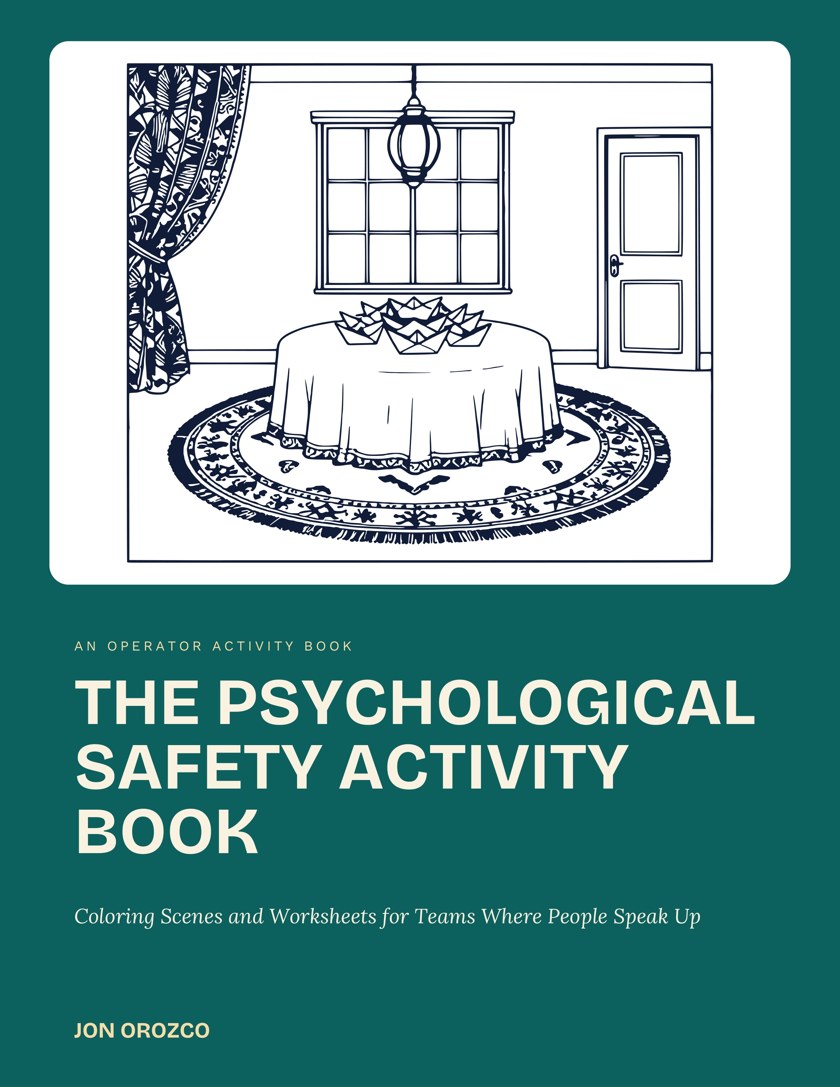
The Psychological Safety Activity Book
Coloring Scenes and Worksheets for Teams Where People Speak Up
By Jon Orozco
Practical moves that make speaking up normal and safe.
In development
This title is being developed. The sample below introduces the current manuscript; release details may change.
Try a sample situationWho this is for
Managers and team leads who want people to raise problems early.
People stay quiet about problems until it is too late, and managers do not know why.
The current manuscript includes 20 practice situations, reflective coloring plates, and 16 practical tools.
The practice inside
01The Quiet Room
Silence is not the absence of problems. It is the absence of reporting. This part teaches you to read what a quiet team is really telling you.
02Four Doors
Safety is built in four layers: belonging, learning, contributing, and challenging. The four doors follow Timothy R. Clark's four stages of psychological safety. A team can have one door open and the next one stuck.
03Your Reaction Is the Message
People do not learn your values from a poster. They learn them from your first five seconds after bad news. This part trains that reaction.
04Hard Moments, Real Rooms
The same pattern shows up on plant floors, in project teams, and in offices. One reaction makes speaking too expensive. These moments practice the fix.
A situation from the manuscript
Any questions? No? Good.
You finish explaining the new process. You look around the table and ask, "Any questions?" Nobody speaks, and you feel great. Two weeks later the process is being done three different ways.
Rewrite each closing line so it invites a real answer.
- Any questions? No? Good, let's move on.
- Is everyone on board? Great.
- Does that make sense to everyone?
Make your call, then read the field note
Zero questions often means fear, not clarity. Ask a question that assumes there are answers. "Which part will be hardest to do?" works far better than "Any questions?"
Try this next: End your next meeting with "What is still fuzzy?" Then wait ten full seconds.
Practice with fictional details. This excerpt offers general education, not legal, financial, or clinical advice. Use approved workplace processes and qualified support for real cases.
Tools you can return to
- Your 90-day plan
- The first five seconds checklist
- The team safety score sheet
- Where the truth dies
- Quiet or scared?
- Receive a hard truth
- Quiet-room bingo
- Twelve weeks of better habits
- The five reporting signals
- The four doors check
- Voices I have not heard
- The open-door one-on-one
- Build the lowest door
- When someone raises a concern
- Concerns I can still catch early
- Safer or quieter? The day 30 check
Put the practice to work
Use one situation for individual reflection or a manager discussion. Compare your first response with the field note, then choose one change to try in the following week.
Discuss a team learning session →A book supports practice. For an active workplace issue, follow your organization’s process and seek appropriate professional guidance.
Keep exploring
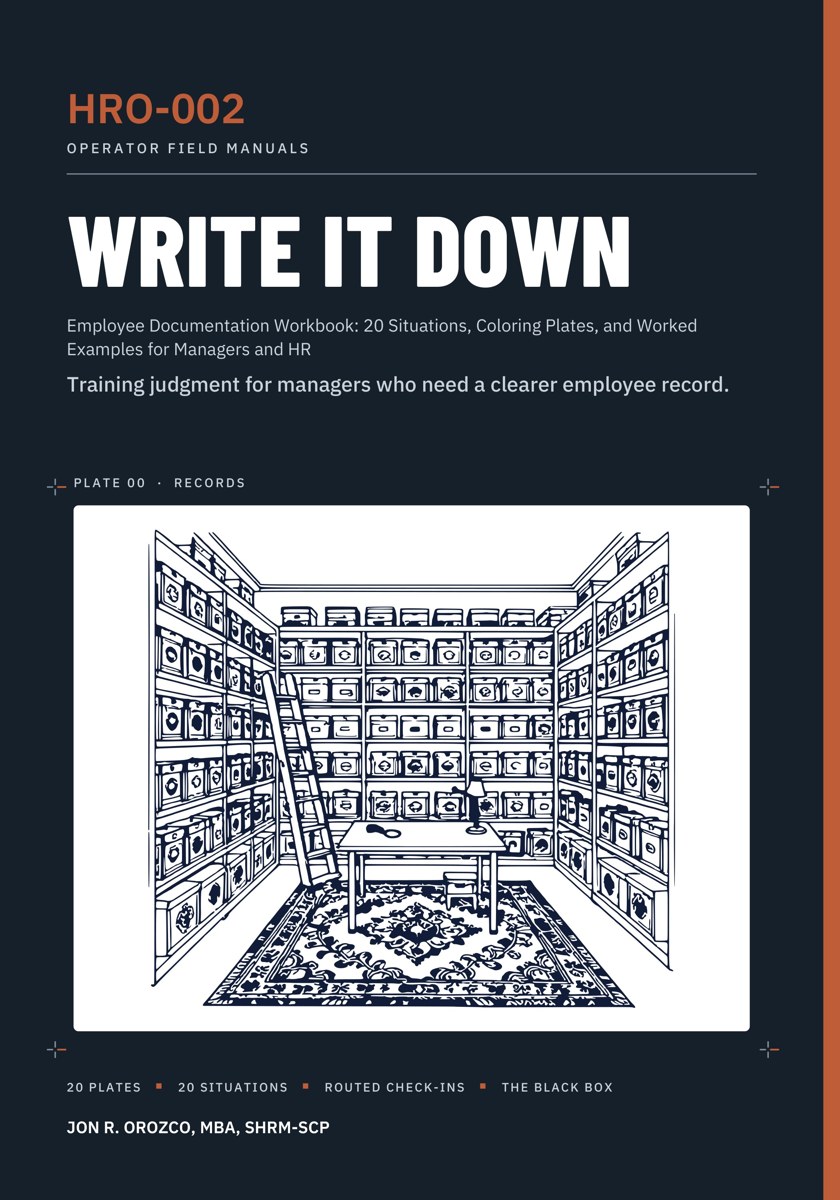
Write It Down
Write a factual record someone else can understand, with the employee’s account and a clear next step.
Solo HR
Triage competing cases, make the queue visible, and give each next action an owner and a date.
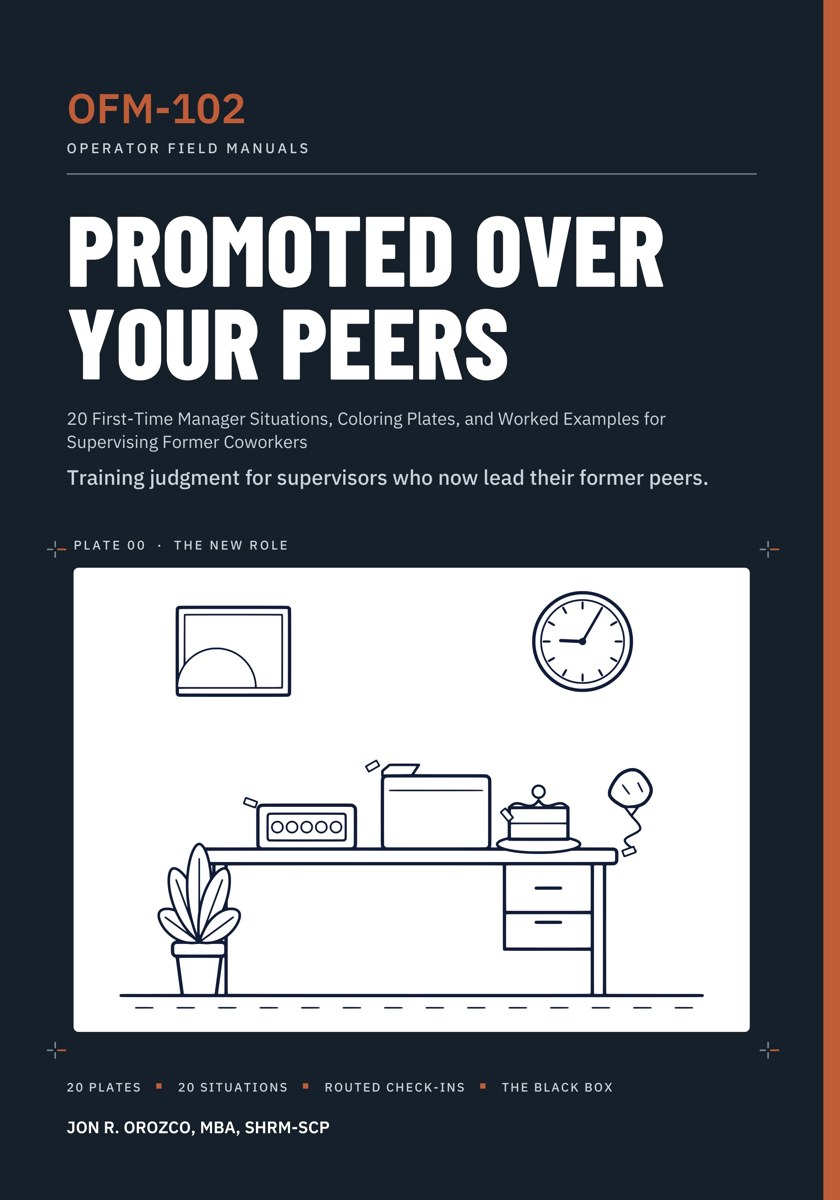
Promoted Over Your Peers
Practice the shift from coworker to supervisor without turning friendship into favoritism.