
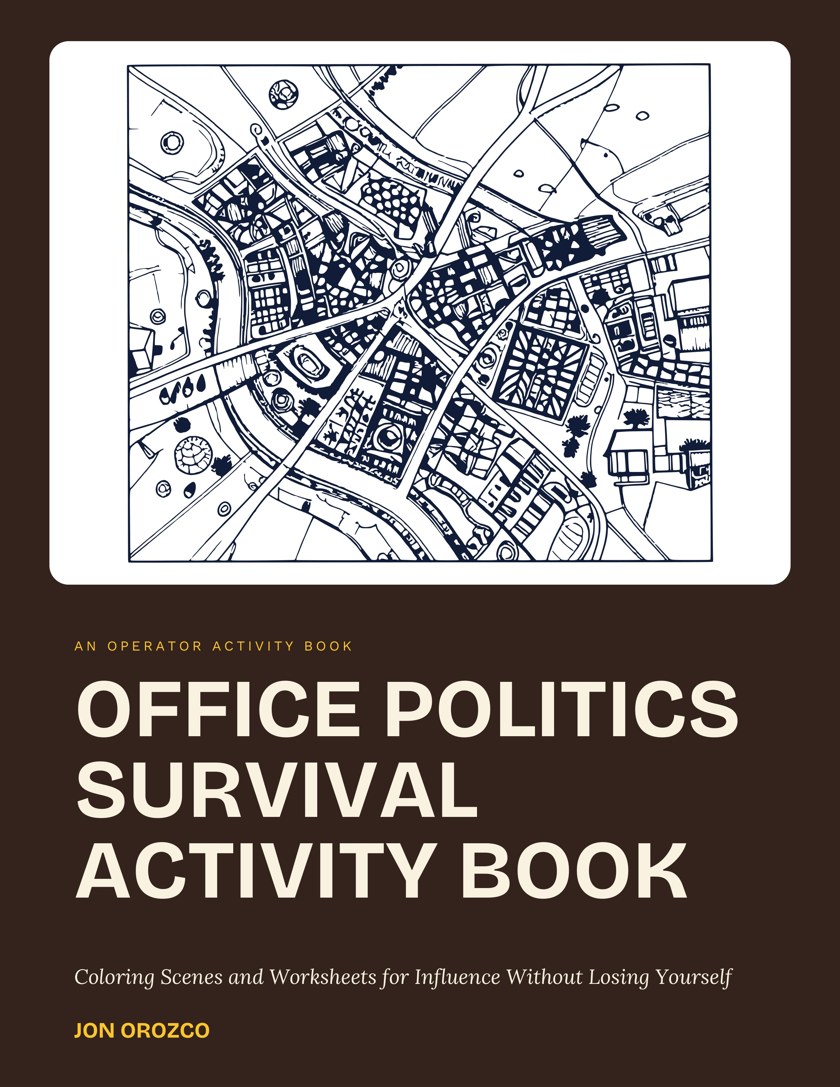
Workplace influence
Office Politics Survival Activity Book
Coloring Scenes and Worksheets for Influence Without Losing Yourself
By Jon Orozco
Read how decisions and influence work, build credibility, and choose when and how to raise your ideas.
In development
This title is being developed. The sample below introduces the current manuscript; release details may change.
Try a sample situationWho this is for
Office workers, new leaders, and anyone who just realized the org chart is not the real map.
You do good work, but decisions happen through relationships and conversations the org chart does not explain.
The current manuscript includes 20 practice situations, reflective coloring plates, and 16 practical tools.
Why this book exists
Influence is part of working with people. This activity book helps you practice reading relationships, earning trust, and choosing your timing while keeping your principles.
What you’ll practice
01Read the Real Map
Before you try to influence anything, learn who actually moves things. This part teaches you to see the second org chart, and to notice when it changes.
02Earn Your Pull
Pull is earned slowly and lost quickly. This part is about credibility, favors without a ledger, and being the same person in every room.
03Work the Room
Good ideas die when the right people hear about them too late. This part teaches you to find who matters to a decision and to meet each one honestly.
04Win Without Losing Yourself
Influence you could not explain out loud is not influence you want. This part is about credit, honesty, losing well, and leaving the place a little healthier.
Try a sample situation from the book
The meeting before the meeting
You present your plan at the staff meeting. Everyone nods. Two days later it is approved with changes you never heard discussed. Someone says, 'We talked about it at lunch.'
What do you do first?
- Decide the process is rigged and stop caring.
- Ask who was consulted, and notice who the lunch table seems to include.
- Email everyone to demand a fair hearing.
Make your call, then read the field note
When the real talk happens outside the meeting, the meeting is for show. Do not get angry. Get curious, and learn who gets asked early.
Try this next: After the next decision, write down who was consulted before the meeting.
Practice with fictional details. This excerpt offers general education, not legal, financial, or clinical advice. Use approved workplace processes and qualified support for real cases.
Tools you can return to
- Your 90-day influence plan
- Who really moves things
- The honest audit
- Who decides, and who really decides
- Before the big meeting
- Who a project touches
- Influence or manipulation?
- Office politics bingo
- The political risk check
- Political risk table
- Ask for the honest read
- Weekly influence log
- Network gaps
- Twelve weeks of better habits
- Where are you on the ladder?
- Your influence year
Put the practice to work
Choose one situation that resembles the work you face. Make your call, compare it with the worked example, and identify what you would change. Take one useful move into your next assignment, conversation, or team discussion.
Discuss a team learning session →A book supports practice. For an active workplace issue, follow your organization’s process and seek appropriate professional guidance.
Keep exploring
Write It Down
Turn vague employee notes into factual records with context, the employee’s account, and a clear follow-up.
Solo HR
Move competing requests out of your head and into a visible case queue with priorities, owners, and next steps.
Promoted Over Your Peers
Move from coworker to supervisor with clear boundaries, consistent work decisions, and conversations you have practiced.