
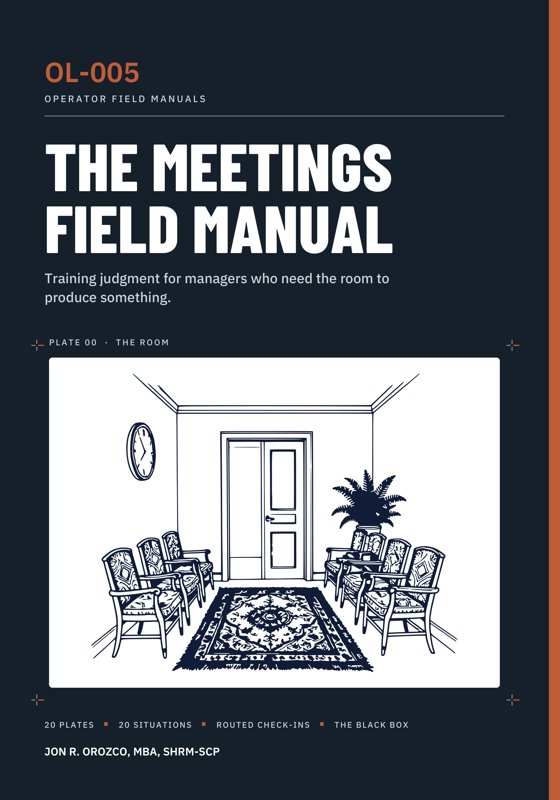
Meetings
The Meetings Field Manual
20 Meeting Situations, Coloring Plates, and Tools for Fewer, Better Meetings
Give each meeting a purpose, a decision owner, and actions that survive the end of the hour.
Coming to Amazon
The paperback is being prepared for release. A purchase link will appear here when the Amazon listing is available.
Try a sample situationWho this is for
Anyone who runs or sits in too many meetings.
Meetings eat the week and decide nothing.
The current manuscript includes 20 practice situations, reflective coloring plates, worked debriefs, and 16 practical tools.
The practice inside
01Why Are We Here?
Before you fix a meeting, ask what job it is doing. Most are doing none. Some are trying to do four at once.
02Run the Hour
A good weekly meeting has five stops, in order. Skip a stop and the hour leaks.
03Make It Stick
A decision nobody wrote down is only a conversation. This section is the paper trail that saves you from "I thought we agreed."
04Fewer, Better
Fewer meetings is not a hack. It comes from knowing where each topic belongs and writing the rest down.
A situation from the manuscript
The invite with no agenda
At 4:50 on a Friday, an invite lands for "Sync." No goal, no agenda, twelve guests. You accept because declining feels rude, then spend Monday's hour wondering what you were invited to do.
Check what a good invite should say.
- Why we are meeting, in one line.
- The decision or result we need by the end.
- Who owns that decision.
- What to read before we start.
- When we stop, and what gets cut if time runs short.
Make your call, then read the field note
No agenda, no meeting. An invite is a small contract: here is the job, here is who does it, here is when we stop.
All five lines belong on a good invite. The first two matter most: why we are meeting, and the result we need.
The stop time is the one people skip. It protects everyone's afternoon.
An invite with none of these is a request for your time with no plan. Ask for the goal before you accept.
Try this next: Add a purpose line to the next invite you send, or ask for one on the next invite you get.
Practice with fictional details. This excerpt offers general education, not legal, financial, or clinical advice. Use approved workplace processes and qualified support for real cases.
Tools you can return to
- Your meeting reset plan
- Meeting audit
- The meeting checklist
- Does this need a meeting?
- Decision capture card
- Decision log
- Tell the organizer what would help
- Meeting bingo
- Twelve weeks of better meetings
- Action tracker
- The five-part system check
- Pre-read one-pager
- Match topics to rhythms
- Where my week goes
- Meeting debrief
- Phrases worth keeping handy
Put the practice to work
Use one situation for individual reflection or a manager discussion. Compare your first response with the field note, then choose one change to try in the following week.
Read: Five lines that make a meeting invite earn its place →Discuss a team learning session →A book supports practice. For an active workplace issue, follow your organization’s process and seek appropriate professional guidance.
Keep exploring
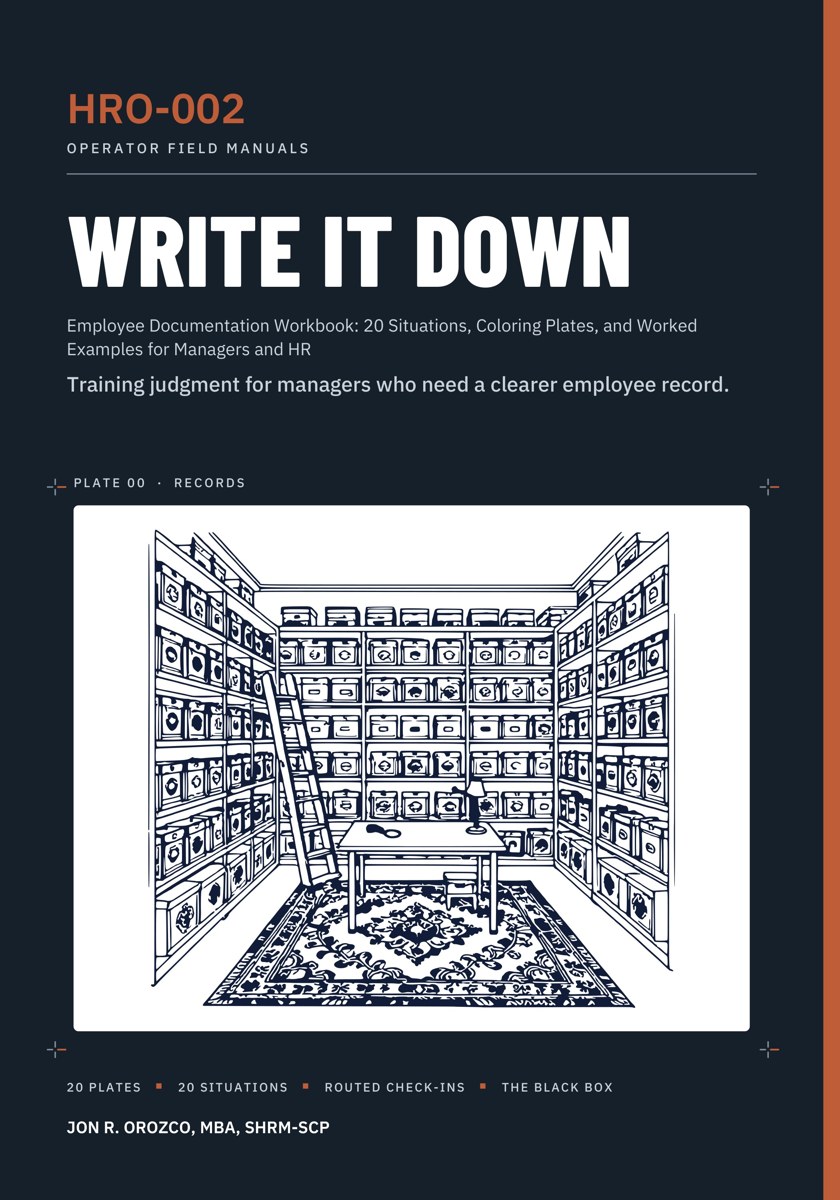
Write It Down
Write a factual record someone else can understand, with the employee’s account and a clear next step.
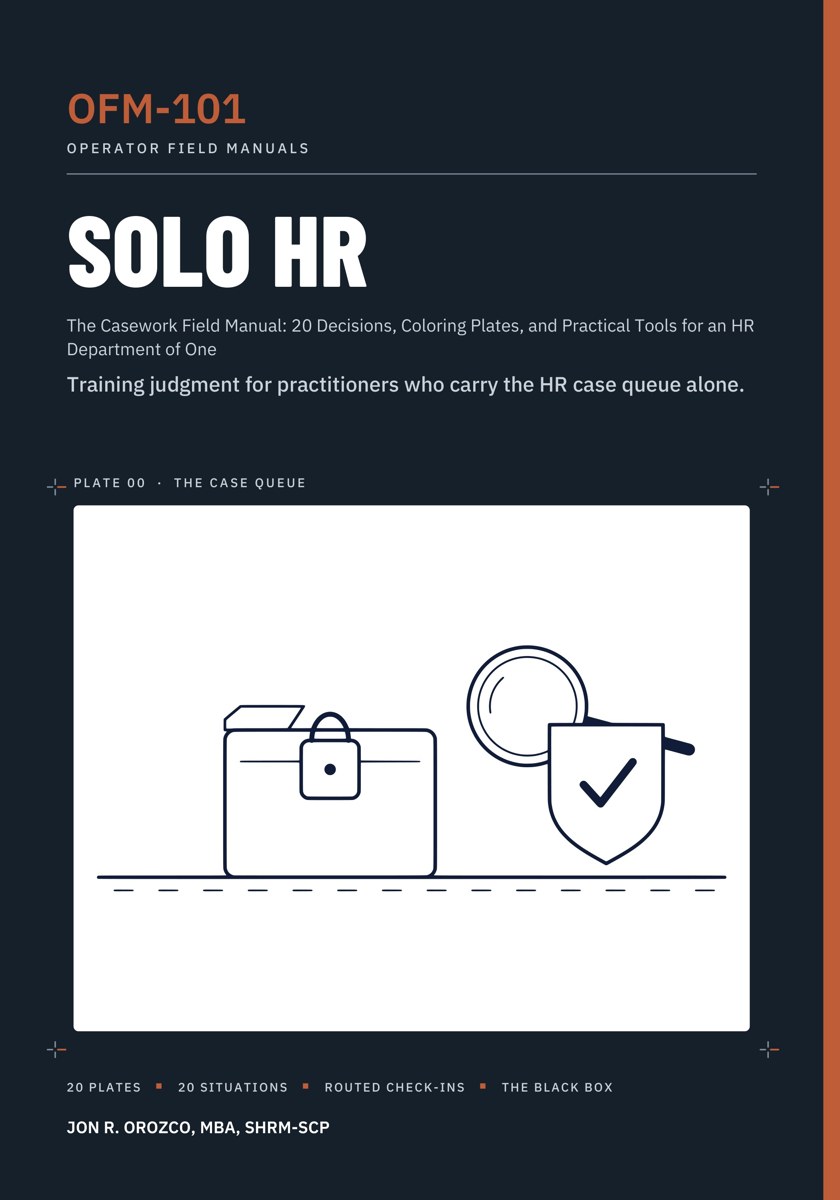
Solo HR
Triage competing cases, make the queue visible, and give each next action an owner and a date.
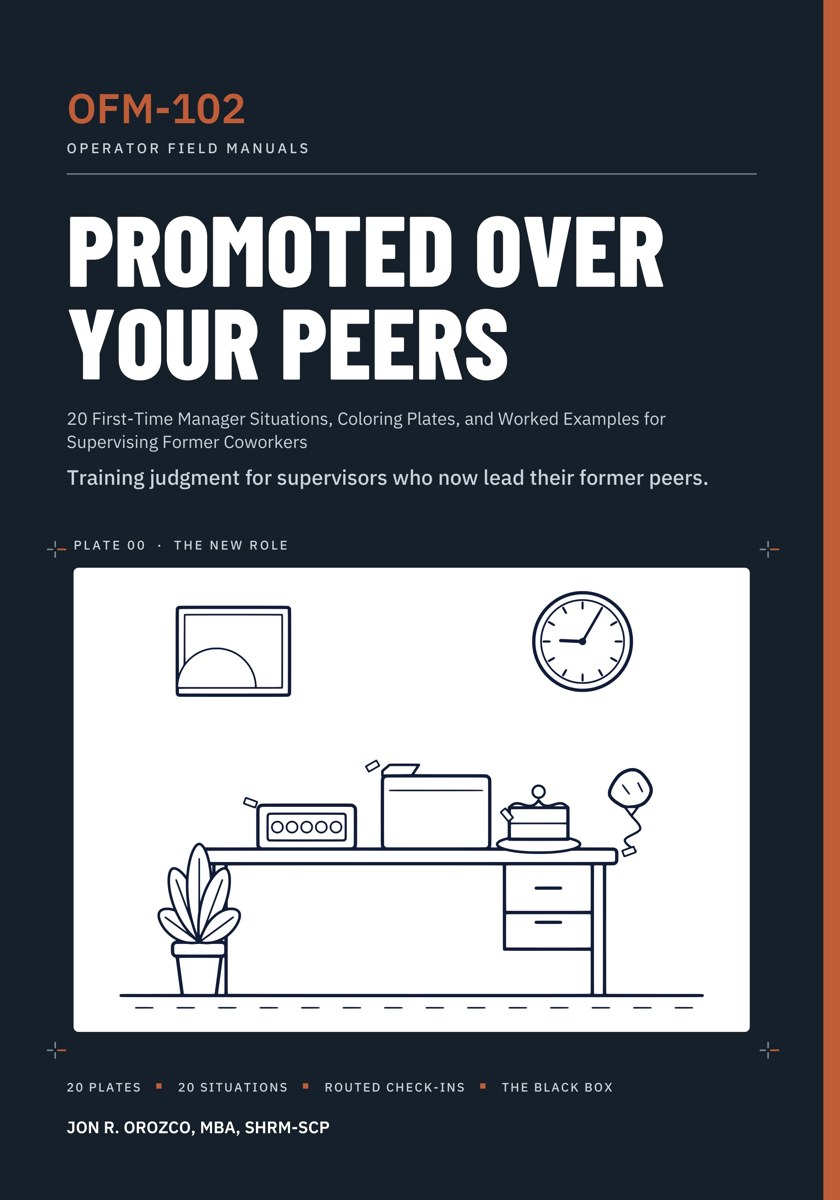
Promoted Over Your Peers
Practice the shift from coworker to supervisor without turning friendship into favoritism.