
Manager behavior
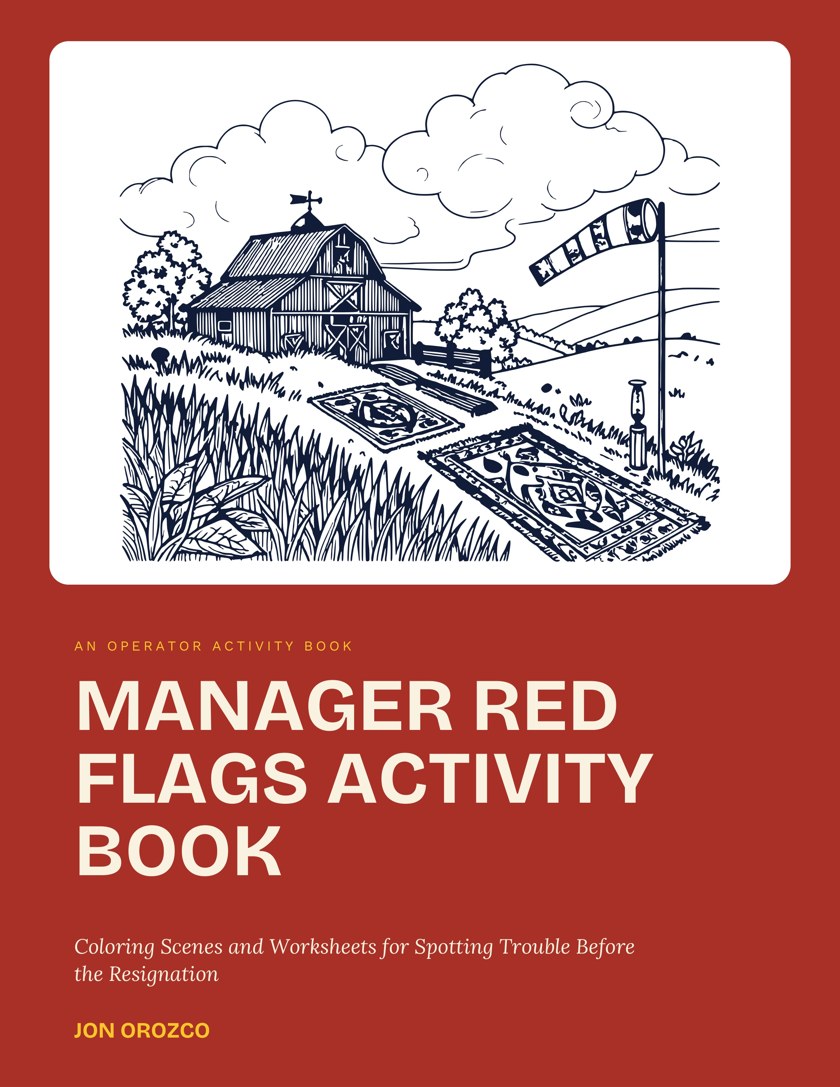
Manager Red Flags Activity Book
Coloring Scenes and Worksheets for Spotting Trouble Before the Resignation
By Jon Orozco
A plain way to spot the pattern, document it, and act before it costs someone.
In development
This title is being developed. The sample below introduces the current manuscript; release details may change.
Try a sample situationWho this is for
HR professionals, senior managers, and employees who report to a difficult boss.
Trouble with a manager shows up months before the resignation and nobody names it.
The current manuscript includes 20 practice situations, reflective coloring plates, and 16 practical tools.
The practice inside
01Read the Weather
Trouble rarely arrives as a scandal. It arrives as quiet. This part trains your eye for silence, side channels, and a dashboard that looks a little too clean.
02The Five Signals
Leadership drift has five signals: inconsistency, retaliation, trust erosion, avoidance, and identity-based leadership. Learn to spot each one by what people do, not by how you feel about the manager.
03Five Faces of Manager Risk
Five manager profiles show up again and again. Each began as a strength, and none is a villain. Use them as a map to predict the next move, never as a label to stick on a person.
04Name It, Record It, Act
Spotting a flag is half the work. This part covers the phrases that keep trouble in place, how to write down what happened, how to open the conversation, when to call HR or counsel, and how trust comes back.
A situation from the manuscript
The quiet meeting
You lead the department above a team that meets weekly. Today the meeting ended eleven minutes early. Nobody pushed back, nobody asked a question, and you walked out pleased.
What might that quiet mean?
- Agreement. The plan was good, so I will take the win.
- Caution. People may have learned that honesty costs something, so I will check.
- Tiredness. I will send the team a cheerful note.
Make your call, then read the field note
Silence is data. A quiet room can mean agreement, or it can mean people learned that speaking up costs something. Look at what changed, not only what you heard.
Try this next: Ask two people one-on-one what the team avoids saying in meetings, and write down what you hear.
Practice with fictional details. This excerpt offers general education, not legal, financial, or clinical advice. Use approved workplace processes and qualified support for real cases.
Tools you can return to
- Your 30-day red flag plan
- The early signs list
- The twelve month timeline
- Pattern or bad day?
- The weekly stability check
- The leadership drift audit
- Three instances, in plain facts
- Red flag bingo
- The dated facts log
- The after a concern check
- Conversation prep
- The repair planner
- Twelve checks after the talk
- The phrase swap log
- If your boss is the problem
- Twelve weeks of steady habits
Put the practice to work
Use one situation for individual reflection or a manager discussion. Compare your first response with the field note, then choose one change to try in the following week.
Discuss a team learning session →A book supports practice. For an active workplace issue, follow your organization’s process and seek appropriate professional guidance.
Keep exploring
Write It Down
Write a factual record someone else can understand, with the employee’s account and a clear next step.
Solo HR
Triage competing cases, make the queue visible, and give each next action an owner and a date.
Promoted Over Your Peers
Practice the shift from coworker to supervisor without turning friendship into favoritism.