
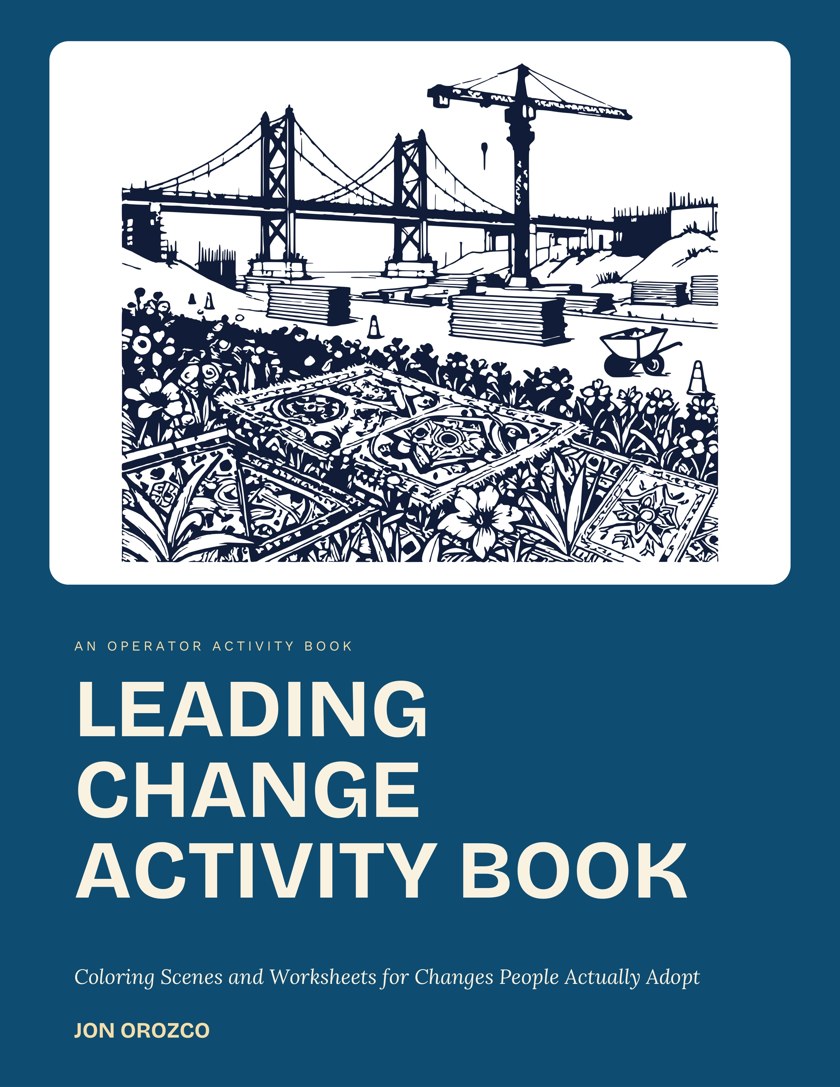
Leading change
Leading Change Activity Book
Coloring Scenes and Worksheets for Changes People Actually Adopt
By Jon Orozco
A practical way to plan, explain, and land a change with the people who have to live it.
In development
This title is being developed. The sample below introduces the current manuscript; release details may change.
Try a sample situationWho this is for
Managers and leaders rolling out something new.
Changes get announced and then quietly ignored.
The current manuscript includes 20 practice situations, reflective coloring plates, and 16 practical tools.
The practice inside
01Survey the Site
Most changes wobble before they start. This part helps you find the soft ground while fixing it is still cheap.
02Read the Weather
People push back on change for real reasons. This part helps you tell which reason you are facing, so you answer the right problem.
03Build the Bridge
Your message is part of the build. This part walks through saying why, what it means for people, and how they will cross, in an order that holds.
04Keep It Standing
Launch is the start of the work. This part is about staying steady, earning trust through what you do, and making the new way the normal way.
A situation from the manuscript
Applause is not adoption
The announcement went perfectly. Applause, nodding, a slide with a tidy slogan. Three weeks later, nobody has changed a single thing about how they work.
What do you do next?
- Schedule another kickoff to bring the energy back.
- Put the new way into agendas, checklists, and reviews, and ask about it every week.
- Send a reminder with the slogan and hope it sinks in.
Make your call, then read the field note
A good announcement is not a change. People adopt what shows up in their calendars and reviews, so put the new way there. Otherwise they learn to wait you out.
Try this next: Add one agenda item about the change to a meeting you already hold.
Practice with fictional details. This excerpt offers general education, not legal, financial, or clinical advice. Use approved workplace processes and qualified support for real cases.
Tools you can return to
- Your change plan
- The pre-launch checklist
- Who is affected, and how ready are they?
- What kind of pushback is this?
- Weekly change check
- Build your message in four parts
- Rollout timeline
- Change bingo
- Change risk list
- The trust check
- Twelve weeks of steady habits
- Manager talking points
- Update rhythm
- Questions people asked
- Stabilize, reinforce, normalize
- Six month look-back
Put the practice to work
Use one situation for individual reflection or a manager discussion. Compare your first response with the field note, then choose one change to try in the following week.
Discuss a team learning session →A book supports practice. For an active workplace issue, follow your organization’s process and seek appropriate professional guidance.
Keep exploring
Write It Down
Write a factual record someone else can understand, with the employee’s account and a clear next step.
Solo HR
Triage competing cases, make the queue visible, and give each next action an owner and a date.
Promoted Over Your Peers
Practice the shift from coworker to supervisor without turning friendship into favoritism.