
First-time managers
Promoted over your peers? Start by naming what changed
By Jon Orozco · Companion to Promoted Over Your Peers
The promotion email went out Friday. On Monday you are in the same room with the same people, but you now assign work and review performance. Pretending nothing changed leaves the team to invent its own version of your authority.
Explain the role before asking for trust
Confirm your responsibilities with your own manager. What can you decide? What must be approved elsewhere? Which concerns have a separate reporting route? You cannot explain boundaries you have not established.
A useful opening is simple: “My responsibilities now include coordinating assignments and giving feedback. I will explain the criteria we use, and I want to hear questions in our individual meetings.” Adapt that wording to your actual authority. Avoid turning the first meeting into a test of loyalty.
Make fairness observable
Friendship does not disappear when a title changes. The decisions around it need clearer criteria. Before approving a favor, assigning a visible project, or changing a schedule, ask whether the same reasoning would apply to another person in the same circumstances.
Explain the work criteria without disclosing another employee’s private information. Consistent reasoning is more useful than a promise that everyone will always receive an identical outcome.
Move difficult questions into a useful setting
A former peer may be disappointed or may challenge you in front of the team. Keep the work discussion clear and address the personal tension in an appropriate private conversation. Public correction can make the transition harder without making the expectation clearer.
In your first thirty days, review where boundaries remain unclear, whether assignments are understandable, and which commitments still belong with their owners. Use established reporting processes for serious concerns rather than treating them as ordinary friendship problems.
Try it this week
Write a two-sentence role-change announcement. Check it with your manager, then list the three decision boundaries your former peers most need to understand.
General educational guidance. Examples are fictional. Follow approved workplace processes and use qualified support for real cases.
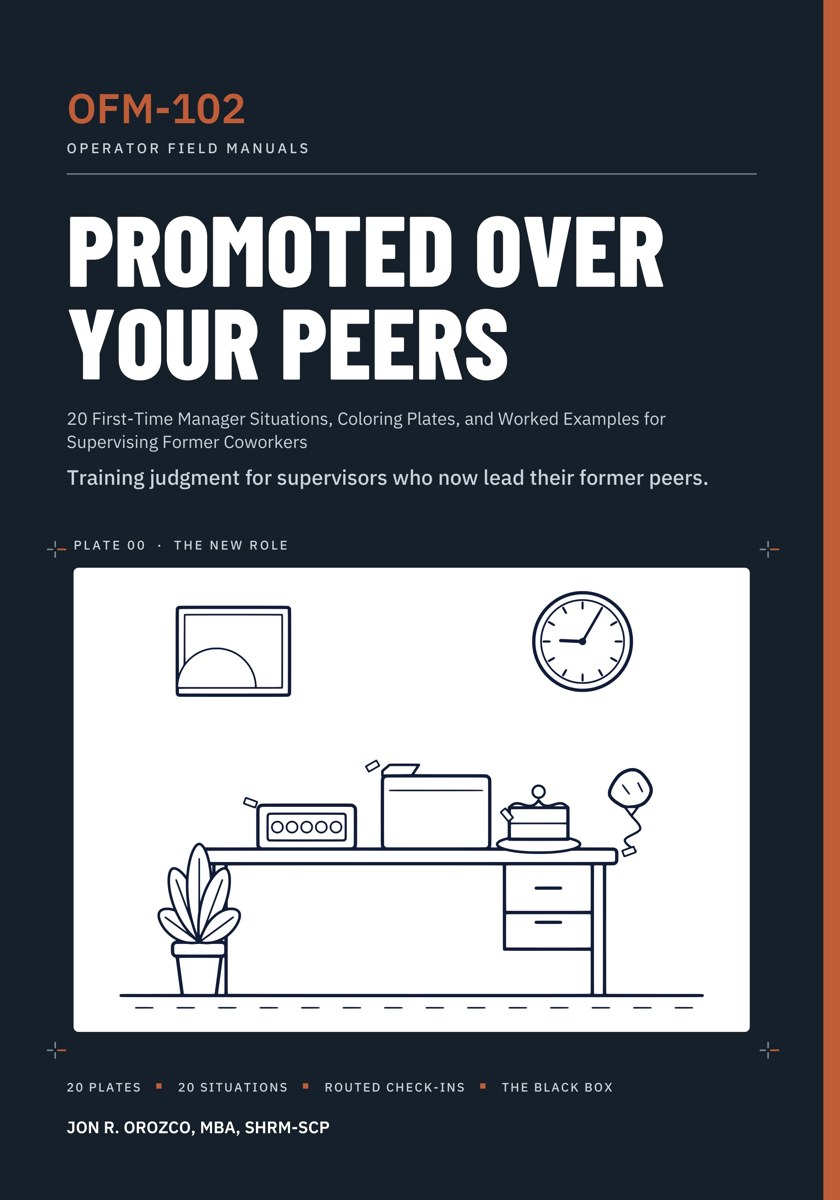
Keep practicing with Promoted Over Your Peers
Practice the shift from coworker to supervisor without turning friendship into favoritism.
Explore the book and its sample →Coming to Amazon
The paperback is being prepared for release. A purchase link will appear here when the Amazon listing is available.
Try a sample situation